
Arrest Warrants in DeKalb County
In DeKalb County, an arrest warrant is a written court order that authorizes law enforcement to take a specific person into custody over an alleged crime. Indiana Code 35-33-2-1 allows one to issue after an indictment, or on probable cause backed by an information. Probable cause is enough of a factual basis for action. It is not proof beyond a reasonable doubt. A judge or clerk issues the order under Indiana law, and the Sheriff and other authorized officers carry it out. Later court events can change its status.
DeKalb County Arrest Warrant Probable Cause
Police submit the supporting information for a judge to review in DeKalb County. The public docket may list a filing or warrant event yet keep the underlying facts out of view. Search-warrant applications and similar materials can stay confidential or restricted. The Indiana criminal code sets the governing warrant framework. Indiana court-access rules then decide what the public may see remotely or at the courthouse. A missing affidavit proves nothing. It does not mean no arrest warrant exists. Ask the Clerk whether a redacted public copy or a case-summary entry is available.
What a DeKalb County Arrest Warrant Contains
Indiana Code 35-33-2-2 spells out what a DeKalb County arrest warrant must contain. The document has to identify the person or give a description. It states the offense, the date, and the county, and it bears a clerk or judge signature. It commands arrest and a court appearance, with bail included if any is set.
| Person | Name or description stated in the order. |
|---|---|
| Offense | The alleged offense, not a finding of guilt. |
| Date and county | When and where the warrant issued. |
| Signature | Clerk or judge as the statute permits. |
| Command | Direction to arrest and bring the person before court. |
| Bail | Included if the court sets it. |
No DeKalb vendor warrant-number format was verified. Never invent a sample number.
DeKalb County Arrest Warrant Access
Access to DeKalb County warrant records follows Indiana Administrative Rules 4, 5, and 9. Those rules cover public court records, excluded material, and remote access. Juvenile, sealed, protected, or operationally sensitive details may be withheld. So a public case summary does not open every warrant affidavit to view.
Access limit: Online absence can reflect confidentiality, a new filing, another jurisdiction, or a record available only through the Clerk.
The official court-record rules are shown in the local research capture:
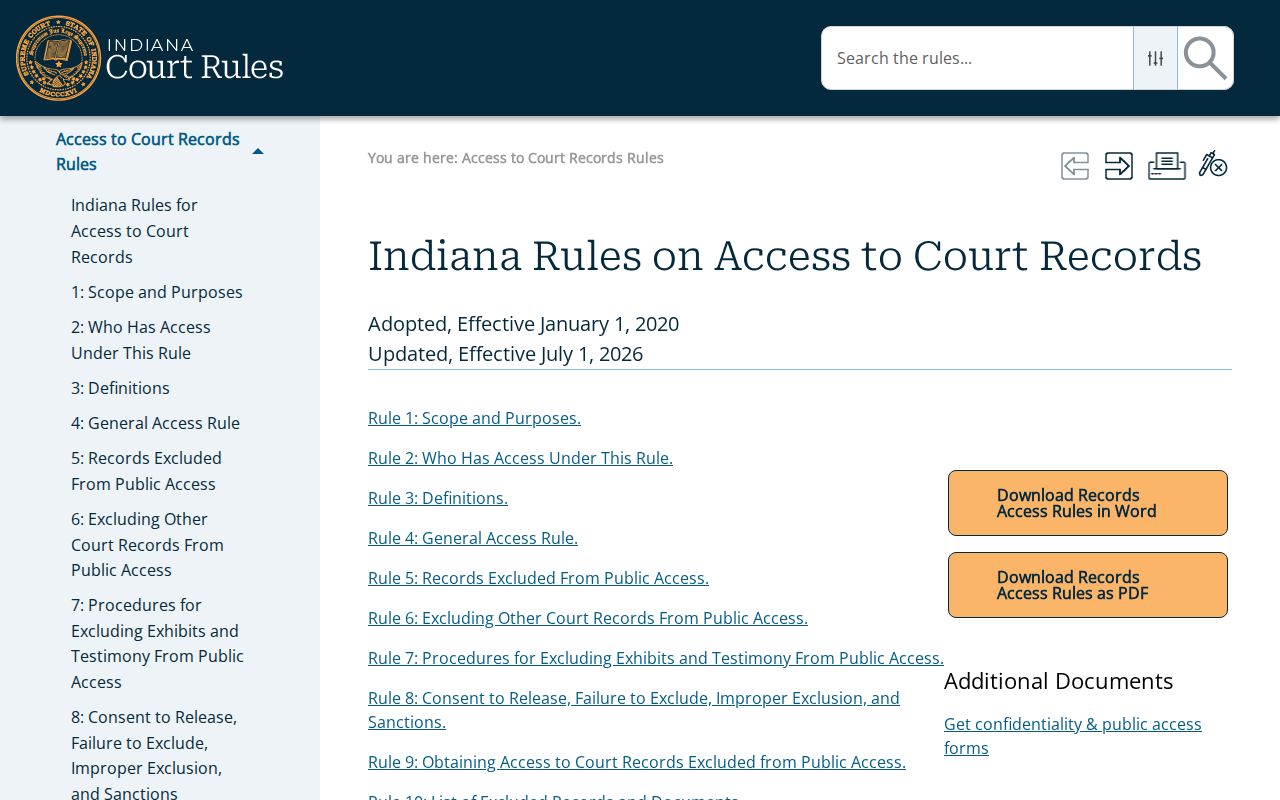
Request only public material and avoid private identifiers.
How DeKalb County Arrest Warrants Are Served
Serving a DeKalb County arrest warrant is the Sheriff's Office job, along with county custody, booking, surrender, and jail logistics. City police can encounter or execute an order within their own authority. The issuing court keeps control of the docket and warrant status. Arrest may happen during police contact, at an address, or through a planned surrender. Booking, an initial court process, and bail review can follow. The county publishes no dedicated warrant-unit extension and no guaranteed surrender schedule. Call the Sheriff at 260-925-3365 before a planned arrival. Ask about identification, medication, transport, booking, bond, hearing timing, and whether the proposed time works.
DeKalb County Arrest Warrant Offices
Warrant business in DeKalb County splits between two buildings. The courthouse at 100 S. Main Street houses Circuit, Superior I, Superior II, and the Clerk. The Sheriff and jail at 215 E. 8th Street handle service and custody. So recall questions go to the court, and surrender questions to the Sheriff. The Auburn Police page adds city-police context.
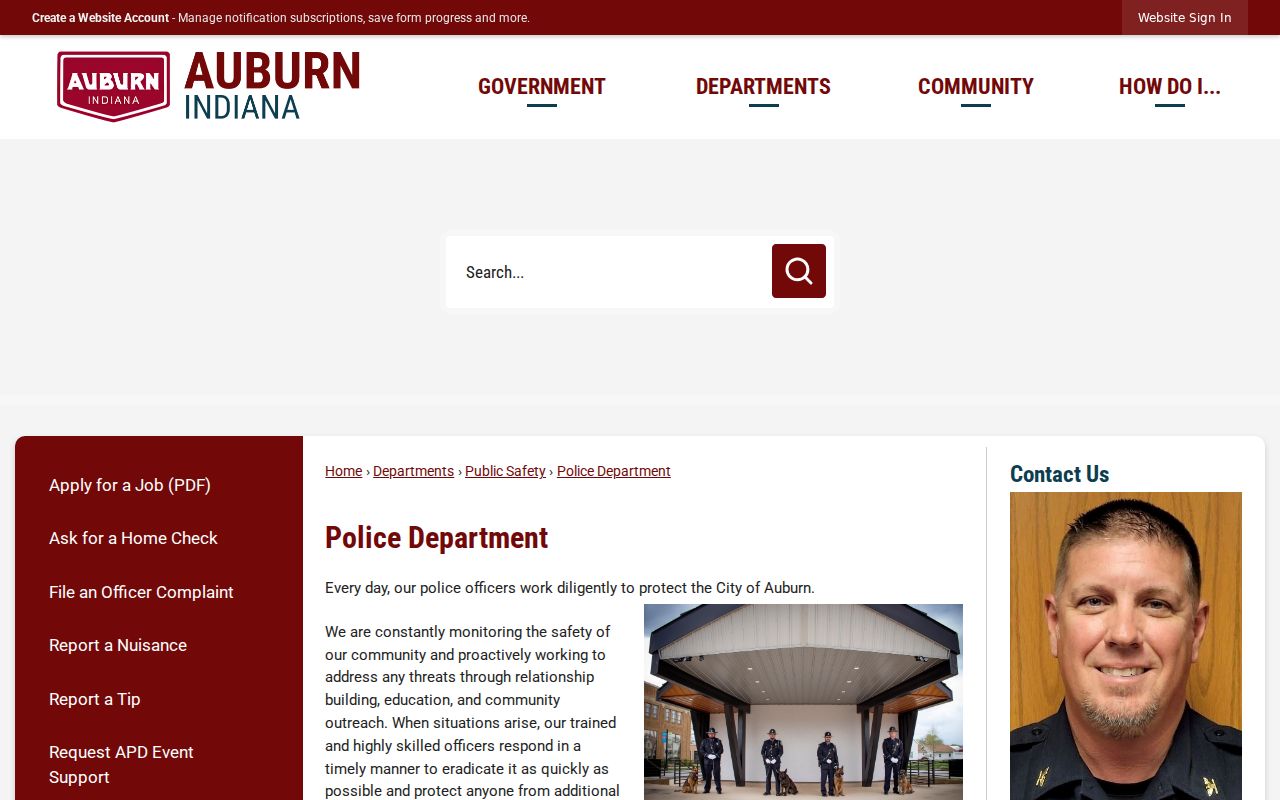
A city police report may describe the incident, but it cannot confirm that a DeKalb County court warrant is still active. Verify with the court and the Sheriff.
DeKalb County Arrest Warrant Comparisons
Each DeKalb County court instrument demands a different response. A summons orders a person to appear. It does not authorize arrest first. An arrest warrant authorizes custody on statutory grounds, while a bench warrant usually follows a missed court duty.
| Feature | Arrest Warrant | Summons | Bench Warrant |
|---|---|---|---|
| Main direction | Arrest and bring before court | Appear on a stated date | Take into custody after a court issue |
| Basis | Indictment or probable cause | Charge handled by appearance | Missed appearance or condition |
| Response | Counsel and planned surrender | Appear as directed | Issuing court and recall process |
See bench warrant procedures for missed-date detail.
DeKalb County Arrest Warrant Bond
DeKalb County local rules fix bail, if any, by the court and endorse it on the warrant. The posted schedule is advisory, and judges keep their discretion. Its warrantless-arrest examples cannot predict any specific arrest warrant. The Sheriff bail page describes cash, clerk, surety, and own-recognizance release.
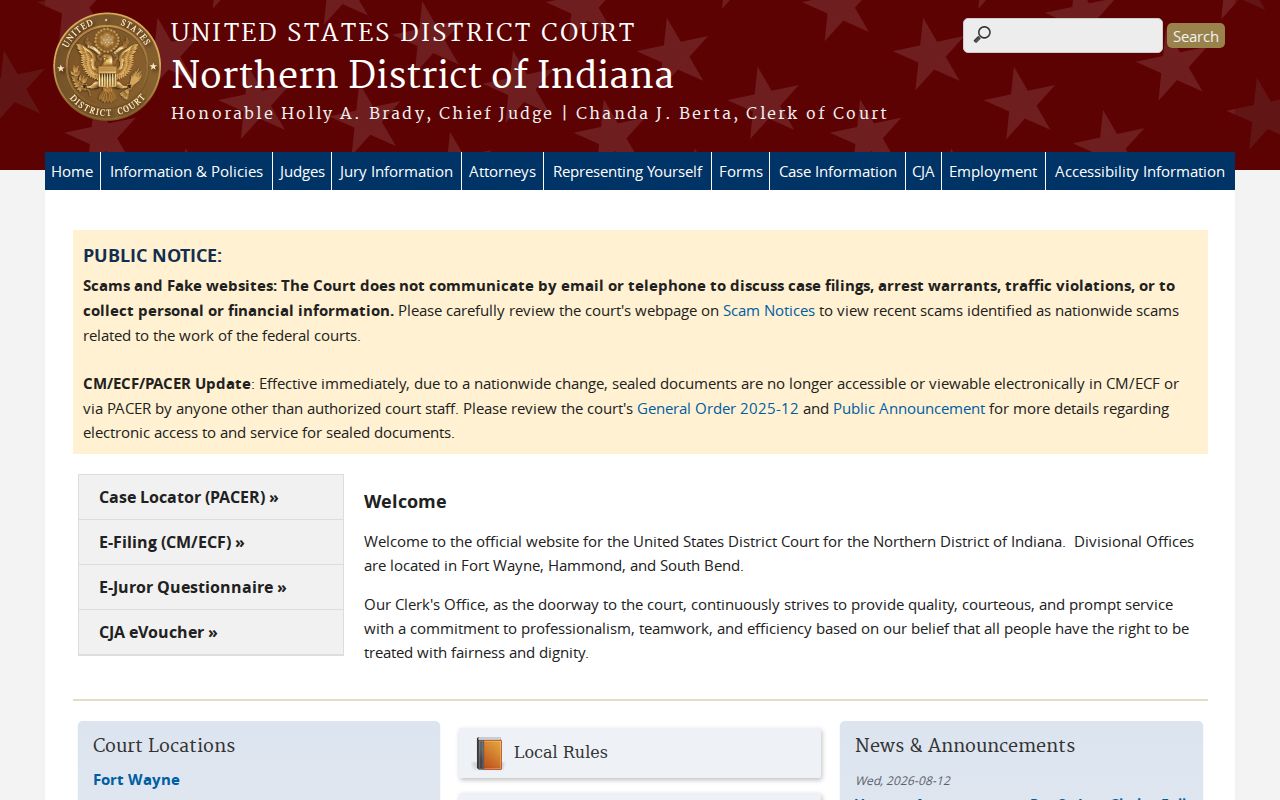
That page also makes clear that federal matters follow the Northern District route rather than the DeKalb County portal. Judge-only categories may need a hearing before bail is set.
Your DeKalb County Arrest Warrant Options
With the Sheriff and the issuing court, confirm the court, case number, warrant type, date, status, and bond for any DeKalb County warrant. Talk to a lawyer first. Ask whether an attorney filing, a court appearance, planned surrender, recall, or a quash procedure is available.
Prepare before surrender: An active arrest warrant can lead to custody during police contact, and release timing is never guaranteed.
Keep your proof of recall, payment, bond, release, and disposition. Recheck MyCase, and ask the DeKalb County Sheriff whether its system received the court update. A vendor entry is never the final authority.
Federal Warrants Require a Federal Route
A DeKalb County warrant search cannot confirm or clear a federal warrant. DeKalb sits in the Northern District of Indiana. The federal clerk in Fort Wayne is 260-423-3000. The U.S. Marshals Northern District office is 260-423-4667. The Northern District court offers the official courthouse context. PACER searches federal cases but is not a warrant database, and sealed matters stay beyond ordinary public search. Use federal counsel for any possible federal matter, and do not expect a courthouse counter to disclose a sealed warrant.
DeKalb County Arrest Warrant Record Requests
A DeKalb County warrant record request starts with the Sheriff's general APRA form, which has no catch-all box for arrest warrants. It asks for a description, date, time, location, incident number, people involved, and your contact details, so a precise request pays off. Name the court, the case number, the warrant date, and the specific entry you want, whether that is the public warrant, a return, a recall, or a docket line. Under the Indiana Access to Public Records Act, an agency hands over existing public records subject to exemptions. It does not have to build a database, open confidential material, or promise its service file matches the court's current docket. The court may hold the warrant and probable-cause filing. The Sheriff may hold only a return or booking record. The Records Division lists 24 hours for an in-person response and seven days by mail, and those are response windows, not delivery promises. A request can be redirected, redacted, or denied under a cited rule, and DeKalb County publishes no warrant-specific copying or certification fee. Ask the Clerk whether a public redacted copy, case summary, courthouse inspection, or certified copy is available, and verify current status with the issuing authority before acting.
Indiana law separates a warrant's issuance from its execution. The written order directs an officer to arrest the person and bring them before the court. A later return records what happened to the order, and the docket may then show service, an initial hearing, bond, amendment, recall, quash, or disposition. Each event carries its own date, so read the earliest warrant entry together with the later chronology rather than alone. DeKalb County's local court structure matters at this step. Circuit Court, Superior Court I, and Superior Court II divide categories under LR17-AR 1-1, and the case header, not a guess based on charge level, identifies the controlling court. Butler City Court runs a separate 17H01 docket. The Sheriff serves and holds warrants, but only the issuing court can reliably say whether its order was withdrawn. Out-of-county and federal possibilities take another route. Hamilton and Ashley cross county lines, so the location tied to an event may point to DeKalb County or Steuben County. A federal arrest warrant belongs to the Northern District and the U.S. Marshals process, and a blank county portal result or an empty ordinary PACER search does not clear a sealed federal matter.
When preparing for surrender, keep bond information separate from legal advice. The Sheriff can explain the lobby, kiosk, booking, and accepted bond process in DeKalb County. The Clerk can explain the public docket and court contact. An attorney can address the case, a planned appearance, and any motion to recall or quash. Watch for scams along the way. The DeKalb Sheriff warned in March 2025 that impostors were pushing missed-jury-duty warrant claims. Real personnel would not call to discuss outstanding warrants or collect fines. Hang up on any caller pushing a link or a remote release fee, then call the Sheriff or court at a number from its official page. Handle a name collision through an authorized office, not public comparison. Give the court or Sheriff the case number and only the identifying details it requests. Never post a full birth date, driver number, address, Social Security number, or photograph to ask strangers whether a record is yours. If a result leans on an old image or a thin description, keep the link and check date, then get direct confirmation, because the Sheriff's warning about incomplete or outdated data applies to every vendor match. A verified court and a current order beat a common name and an archived result every time.